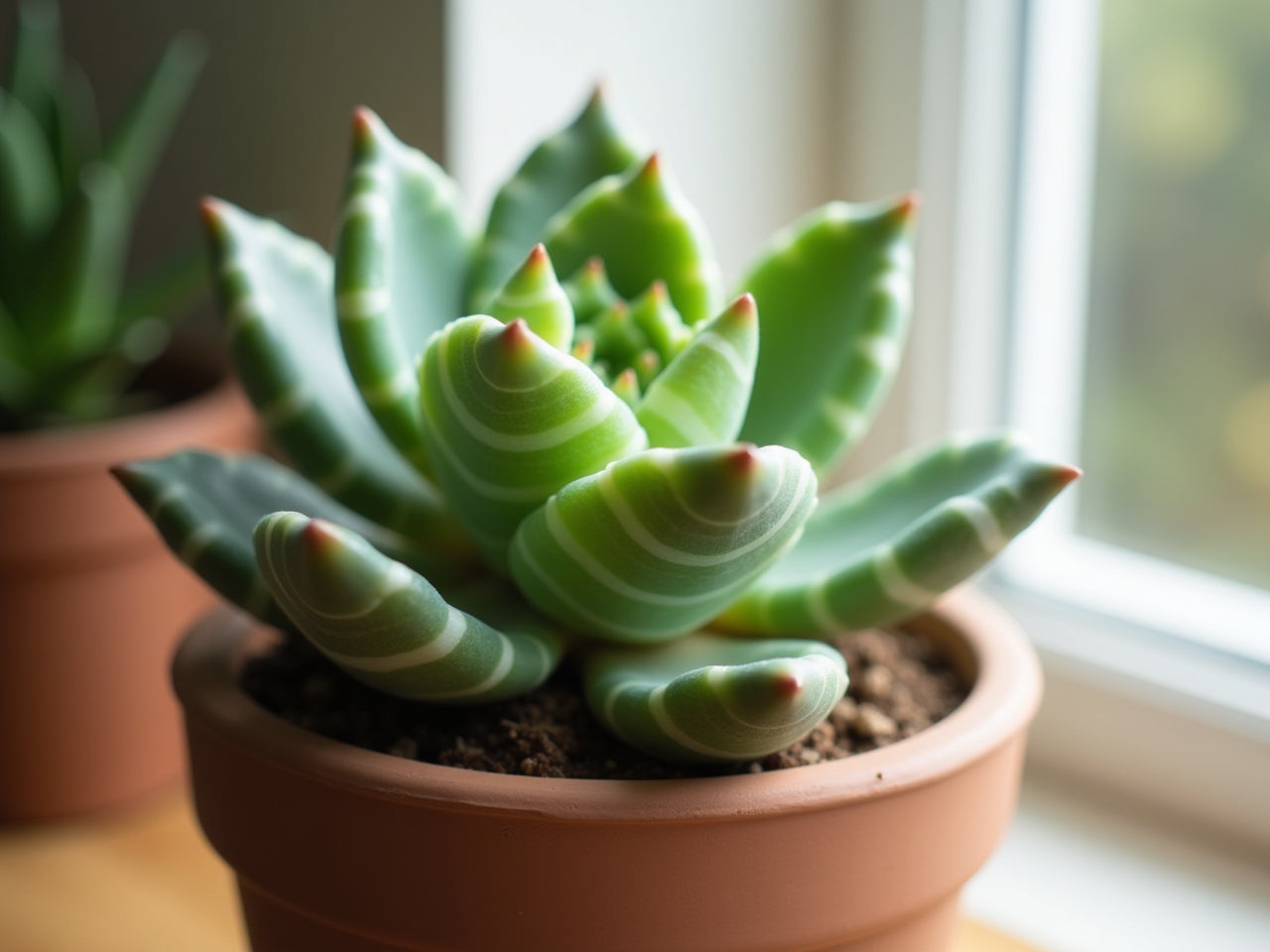
Haworthia, a compact and charming succulent from South Africa, is a wonderful addition to any indoor garden. With its distinctive appearance and low-maintenance nature, this plant is ideal for beginners, apartment dwellers, or anyone looking to add some greenery without the fuss. This comprehensive guide will walk you through everything you need to know to care for your Haworthia and help it flourish indoors.
🌱 What Is Haworthia?
Haworthia is a genus of tiny succulents known for their compact rosettes and fleshy leaves. These plants grow slowly, making them perfect for containers, desktops, and small spaces. With varieties like Haworthia fasciata (Zebra Plant), Haworthia cooperi (with translucent “windows”), and Haworthia limifolia (with ridged, textured leaves), there’s plenty of visual diversity to enjoy.
Despite their exotic look, Haworthias are incredibly adaptable, thriving in various indoor conditions while requiring very little attention.
🪴 Step-by-Step Guide to Growing Haworthia Indoors
🏺 Step 1: Choose the Right Container
Start by selecting a pot with drainage holes to avoid water accumulation. Terracotta and clay pots are excellent choices because they naturally absorb excess moisture, promoting healthier roots. To avoid water damage to your surfaces, place a shallow tray underneath to collect any overflow.
🧱 Step 2: Use Well-Draining Soil
Good drainage is critical. A gritty succulent or cactus mix is best, as it mimics Haworthia’s native environment. You can also create a custom mix using:
2 parts regular potting soil
1 part coarse sand or pumice
1 part perlite
Avoid moisture-retentive soils, as they can lead to rot.
🌿 Step 3: Repotting With Care
If you’re transferring your plant from a nursery pot or updating its container, handle it gently:
Carefully lift the Haworthia from its previous container, taking care to keep the roots intact and undisturbed.
Set the plant carefully into the center of its new pot, ensuring it stands upright before adding soil around the roots.
Fill around the roots with fresh soil, then lightly firm the surface to stabilize the plant without compacting the medium.
After repotting, wait 2–3 days before watering. This short break allows any disturbed or damaged roots to heal.
☀️ Step 4: Provide the Right Lighting
Haworthia prefers bright, indirect light. Gentle morning sunlight is beneficial, but steer clear of strong afternoon rays, which can cause the delicate leaves to burn. Suitable spots include:
Near an east-facing window
A west-facing window with sheer curtains
Under fluorescent grow lights indoors
If the leaves start to bleach or wrinkle, this may indicate light stress. Adjust the plant’s location to a less intense spot with filtered light.
💧 Step 5: Mastering the Watering Routine
Proper watering is essential for Haworthia’s health. Since these succulents retain water in their plump leaves, they can withstand extended dry periods with ease.
Watering tips:
In spring and summer, water every 2–3 weeks.
During fall and winter, when growth slows, cut back watering to once a month or even less, depending on the indoor humidity and temperature.
Allow the growing medium to become thoroughly dry before watering again to help avoid fungal diseases and root decay.
Avoid letting water sit in the rosette or on the leaves, as it can cause rot.
When in doubt, wait an extra day. It’s safer to keep Haworthia on the dry side, as overwatering is far more harmful than occasional dryness.
🌼 Step 6: Minimal Feeding
Fertilize sparingly. During the growing season (spring through early autumn), feed with a diluted cactus fertilizer once every 4–6 weeks. Skip feeding during winter when the plant is dormant.
🌱 Step 7: Repot Only When Needed
Due to its slow growth, Haworthia rarely needs frequent repotting—typically every 2 to 3 years unless specific signs appear, such as:
The roots are circling the pot
The plant is pushing up above the soil
It’s producing lots of offsets
Repotting helps refresh the soil and encourage healthy growth.
🐛 Step 8: Keep Pests Under Control
Though not often plagued by pests, Haworthia can occasionally run into problems—especially in humid or poorly ventilated areas.
Possible issues include:
Mealybugs
Spider mites
Fungus gnats
What to do:
Separate any affected plants right away and treat them using safe, organic solutions suited for indoor use.
Use a soft, damp cloth with neem oil to wipe the leaves and discourage infestations.
Make sure the environment is dry and not overly humid.
Proper airflow and careful watering go a long way in keeping pests at bay.
🌿 Step 9: Propagate Through Offsets
Haworthia naturally produces small pups—miniature clones that grow from the base of the parent plant.”
Propagation steps:
Only separate a pup once it has developed at least 3 to 4 strong leaves, ensuring it’s mature enough to grow independently.
Remove the plant from its pot and gently separate the pup from the parent us