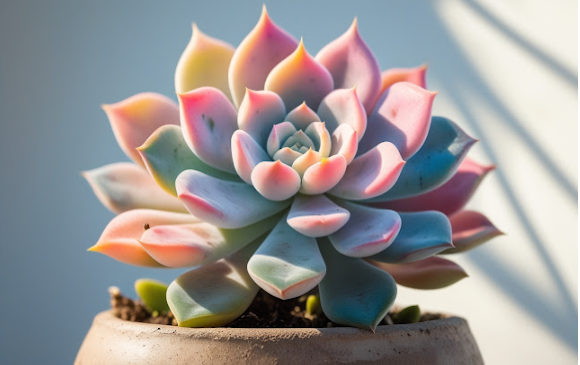
How to Grow Echeveria – The Rosette Jewel
Complete Step-by-Step Guide for Beginners
Echeveria, with its stunning rosette-shaped foliage and vibrant hues, is one of the most beloved succulents among home gardeners. Easy to grow and incredibly rewarding, this low-maintenance plant is ideal for both beginners and seasoned plant lovers. In this guide, we’ll show you how to grow Echeveria step by step—from choosing the right variety to ensuring it thrives indoors or outdoors.
🌱Echeveria is a genus of succulent plants native to semi-desert regions of Mexico and parts of Central America. These plants are known for their thick, fleshy leaves arranged in tight, symmetrical rosettes. Echeveria species showcase a striking array of colors, including shades of blue, green, pink, purple, and beyond. Some varieties also produce tall flower stalks with bell-shaped blooms, typically appearing in spring or summer.
✅ Choosing the Right Echeveria Variety
There are dozens of Echeveria species and hybrids available. For beginners, consider these popular varieties:
Echeveria elegans – A compact variety with blue-gray rosettes, perfect for container gardening and small pots.
Echeveria ‘Lola’ – A pastel-colored rosette with a rose-like shape.
Echeveria ‘Perle von Nurnberg’ – Known for its purple tones and dramatic flair.
Echeveria agavoides – Distinct for its bright green, sharply pointed leaves accented with deep red edges, closely resembling a small agave plant.
Choose a healthy plant with firm, plump leaves and no signs of rot or pests.
🪴 Supplies You’ll Need
Before planting, gather the following materials:
A well-draining pot with drainage holes
Cactus or succulent potting mix
Optional: Perlite, pumice, or coarse sand
Watering can or spray bottle
Fertilizer (diluted, low-nitrogen for succulents)
Gloves (to avoid damaging delicate leaves)
🧑🌾 How to Plant Echeveria (Step by Step)
Step 1: Prepare the Pot and Soil
Echeveria needs excellent drainage to avoid root rot. Use a commercial cactus or succulent potting mix, or make your own by mixing the following ingredients:
2 parts potting soil
1 part perlite or pumice
1 part coarse sand
Fill the pot ¾ full, ensuring the soil is loose and dry.
Step 2: Plant the Echeveria
Remove your Echeveria from its nursery pot gently. Shake off excess soil from the roots.Position the plant in the center of the pot and gently fill in the surrounding space with soil..
Step 3: Let It Settle
Let the plant sit in its new pot for 2–3 days before watering. This allows root damage (if any) to heal and prevents rot.
💧 Watering Your Echeveria
Watering is the most important (and most commonly misunderstood) aspect of Echeveria care.
Use the soak and dry method: Water thoroughly until water drains out, then wait until the soil is completely dry before watering again.
Frequency: Once every 7–14 days, depending on climate.
Avoid letting water sit in the rosette center—this can lead to rot.
Tip: Use your finger or a moisture meter to check that the soil is dry 1–2 inches down before watering.
☀️ Sunlight Requirements
Echeveria loves sunlight! Without enough light, it will stretch and lose its compact rosette form.
Indoor placement: South or west-facing window is best.
Outdoor placement: Full sun to partial shade.
If your plant is indoors and starts to stretch, consider moving it closer to a window or adding a grow light.
Warning: Gradually introduce it to direct sunlight to prevent sunburn.
🌡️ Temperature and Climate
Echeveria thrives in warm, dry climates and is not frost-hardy.
Ideal temperature: 65°F to 80°F (18°C to 27°C)
Can tolerate down to 40°F (4°C) but should be brought indoors in colder months.
Avoid high humidity, as it increases the risk of rot.
🍽️ Fertilizing Echeveria
Feed your Echeveria lightly during the growing season (spring and summer).
Apply a balanced, diluted liquid fertilizer formulated for succulents once a month during the growing season.
Do not fertilize in winter—plants are usually dormant.
Over-fertilizing can cause weak, leggy growth.
🌿 Pruning and Maintenance
Echeveria requires little pruning, but you can:
Remove dead, dry leaves at the base to prevent pests.
Trim flower stalks after they bloom.
Repot every 1–2 years to refresh soil and allow room for growth.
🌼 Propagating Echeveria
Echeveria is easy to propagate, making it a favorite among plant collectors.
From Leaf Cuttings:
Gently twist off a healthy leaf.
Let it callous for 2–3 days.
Place it on dry soil and mist every few days.
In a few weeks, roots will develop and a new rosette will start to emerge.
From Offsets (Pups):
Carefully remove small rosettes growing around the base.
Let them dry for a day or two.
Plant them in well-draining soil and follow normal care.
🐛 Common Pests and Problems
Echeveria is generally hardy, but watch out for:
Mealybugs – White, cotton-like pests; treat with alcohol or neem oil.
Root rot – A frequent yet critical issue that arises when plants receive excessive water or suffer from poor drainage, causing the roots to decay and jeopardizing the plant’s health.