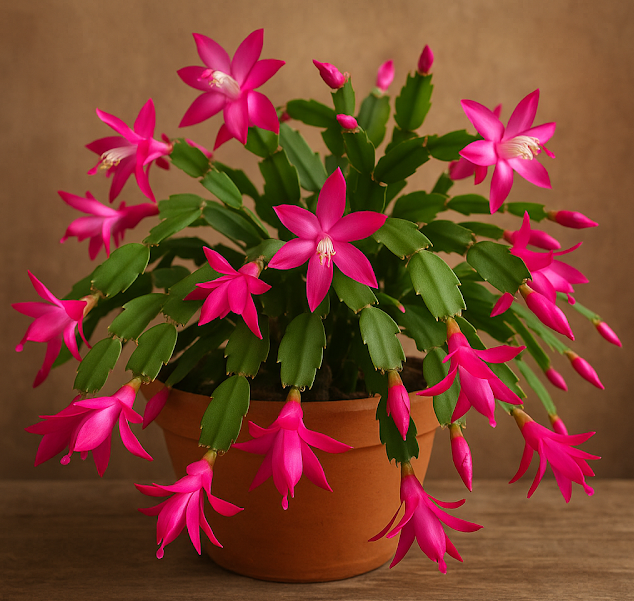
Complete Guide to Growing Christmas Cactus Indoors (Schlumbergera)
The Christmas Cactus (Schlumbergera) is a beloved houseplant known for its vibrant blooms and tropical foliage, especially popular during the holiday season. Unlike typical desert cacti, the Christmas Cactus hails from Brazilian rainforests and prefers more humidity and indirect light. Whether you’re a beginner or a seasoned plant lover, this step-by-step guide will help you grow a thriving Christmas Cactus indoors.
🌿 Why Choose a Christmas Cactus?
Long-lasting blooms: Flowers can last up to 8 weeks.
Easy care: Less demanding than most flowering plants.
Pet-friendly: Non-toxic to cats and dogs (unlike some holiday plants).
Perfect holiday décor: Adds color to your winter space.
🪴 Step-by-Step Guide to Growing a Christmas Cactus
✅ Step 1: Choose the Right Pot and Soil
Container:
Select a container with drainage holes. Christmas Cactus dislikes soggy roots. Clay or ceramic pots work well because they allow for airflow and moisture control.
Soil:
Use a lightweight, well-draining soil mix. A blend designed for cacti and succulents works best. You can also mix regular potting soil with sand or perlite (2:1 ratio) to improve drainage.
☀️ Step 2: Find the Ideal Location
Place your cactus in a bright room with indirect sunlight. A north or east-facing window is ideal. Direct sun can scorch the leaves, while too little light may reduce blooming.
“Expert Tip: Turn the pot slightly every two weeks to promote balanced growth and keep your Christmas cactus from bending toward the light source.”
💧 Step 3: Watering Properly
Watering schedule:
In spring and summer, wait until the top inch of soil is dry to the touch before watering your Christmas cactus.”
In fall and winter (when blooming): Reduce watering slightly.
Avoid letting the plant sit in standing water.
Method:
Water thoroughly until it drains from the bottom. After watering, promptly empty the saucer to keep the roots healthy and prevent rot.”
🌡️ Step 4: Maintain Proper Temperature and Humidity
Maintain temperatures between 60°F and 70°F (15°C–21°C) for your Christmas Cactus, and avoid exposing it to heaters, vents, or cold drafts.”
Humidity:
Being native to rainforests, this plant enjoys moderate humidity. Use a humidity tray or mist the plant occasionally, especially during dry winter months.
🌸 Step 5: Encourage Blooming
To trigger blooming in late fall or early winter:
Shorten daylight exposure: Place the plant in darkness for 12–14 hours each night for about 6 weeks before you want it to bloom.
Cooler temps help: Keep the plant around 50–55°F (10–13°C) during this time.
Limit watering slightly: This stress encourages bud formation.
When buds begin to form, return the plant to its usual lighting and temperature, and continue with regular care.”
✂️ Step 6: Pruning and Shaping
After blooming, lightly prune your cactus to shape it and encourage bushier growth.
How to prune:
Use clean, sharp scissors or pinch segments by hand.
Remove 1–2 segments from each stem tip.
You can replant healthy cuttings for propagation.
🌱 Step 7: Propagation
Christmas Cactus is easy to propagate from stem segments.
Steps:
Cut a healthy segment with 2–3 jointed sections.
Let it dry for 1–2 days.
Plant the segment in moist, well-draining soil.
Keep it in indirect light and mist occasionally.
Roots should form in about 2–3 weeks.
🧪 Step 8: Fertilizing
Feed your cactus every 4–6 weeks during active growth (spring through early fall) using a balanced, water-soluble fertilizer (e.g., 20-20-20) diluted to half strength.
Suspend fertilization when the plant is in bloom or dormant in winter.”
🔁 Step 9: Repotting When Necessary
Repot every 2–3 years in spring, or when roots outgrow the pot.
Steps:
Gently remove the plant from the pot.
Trim any dead or damaged roots.
“Place the plant in a slightly larger container with well-draining cactus mix to support its development.”
Water lightly and avoid fertilizing for the first few weeks.
🛠️ Troubleshooting Common Issues
Problem Cause Solution
Bud drop may be caused by overwatering or sudden temperature fluctuations. To prevent this, keep the environment consistent and protect the plant from drafts.
Wilted leaves Underwatering or root rot Check moisture levels and drainage
No blooms Not enough darkness or light stress Follow blooming prep steps in early fall
Red or purple leaves Light stress or nutrient deficiency Move to indirect light, consider feeding
🌟 Final Tips
To keep the leaves healthy and dust-free, gently wipe them with a damp cloth.”
Keep it out of reach of curious pets or kids to avoid leaf breakage.
With proper care, a Christmas Cactus can live for decades—even passed down through generations.
🎁 In Summary
Growing a Christmas Cactus is a rewarding experience. With just the right balance of light, water, and temperature, you can enjoy lush greenery and stunning blooms year after year—especially when the holidays roll around.