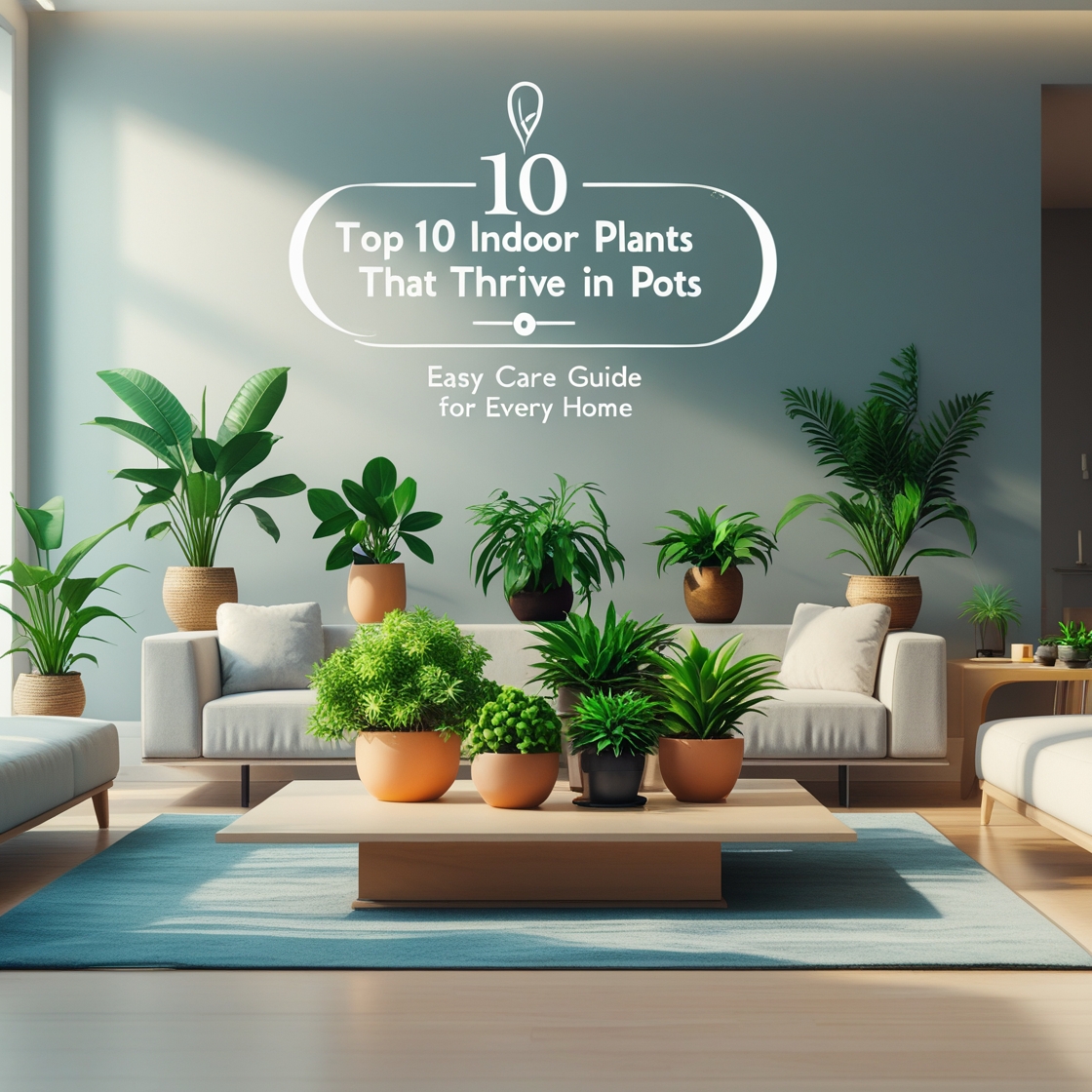
Top 10 Indoor Plants That Thrive in Pots — Easy Care Guide for Every Home
Indoor plants are more than just decorative pieces. They help purify the air, relieve stress, and breathe life into any room.”. Whether you live in a small apartment or a spacious house, growing plants in pots is the easiest way to enjoy greenery indoors.
In this guide, we’ll explore 10 of the best indoor plants for pots, along with tips on care, placement, and design ideas.
- Snake Plant (Sansevieria trifasciata)
Why it’s great: This plant is nearly indestructible. It survives low light, irregular watering, and even forgetful owners.
Pot tip: Use a tall ceramic or clay pot with drainage holes.
Care:
Water every 2–3 weeks
Thrives in low to bright indirect light
Wipe the leaves to remove dust occasionally
- Pothos (Epipremnum aureum)
Why it’s great: Pothos is a trailing vine perfect for hanging pots or high shelves. It grows quickly and propagates easily in water.
Pot tip: Hanging baskets or small decorative planters work well.
Care:
Give your plant a drink only after the upper layer of soil has dried out.”
Prefers bright, indirect light but tolerates low light
Prune vines to control growth
- ZZ Plant (Zamioculcas zamiifolia)
Why it’s great: Shiny leaves and tolerance for neglect make the ZZ plant a top pick for beginners.
Pot tip: Choose a sturdy, medium-sized pot. ZZ plants can get top-heavy.
Care:
Water every 2–3 weeks
Does well in low light
Avoid overwatering to prevent root rot
- Spider Plant (Chlorophytum comosum)
Why it’s great: Known for its arching leaves and baby “pups,” spider plants are easy to grow and fun to propagate.
Pot tip: Use a wide pot to allow the plant to spread.
Care:
Water weekly or when soil feels dry
Prefers bright, indirect light
Trim brown leaf tips regularly
- Peace Lily (Spathiphyllum)
Why it’s great: With elegant white flowers and dark green leaves, the peace lily is both beautiful and functional—it helps purify the air.
Pot tip: Medium-sized pot with good drainage is ideal.
Care:
Water when leaves droop slightly
Likes medium to low light
Keep soil moist but not soggy
- Aloe Vera
Why it’s great: A succulent with healing properties! Aloe is perfect for sunny spots indoors.
Pot tip: Use a terracotta pot with drainage holes and cactus soil.
Care:
Water every 2–3 weeks
Needs bright, direct light
Avoid watering the center of the plant
- Rubber Plant (Ficus elastica)
Why it’s great: Large, glossy leaves add a bold touch to interiors.
Pot tip: Use a deep, stable pot. Rubber plants can grow tall.
Care:
Don’t water until the first inch of soil loses its moisture.”
Prefers bright, filtered light
Rotate the pot regularly for even growth
- Chinese Evergreen (Aglaonema)
Why it’s great: Attractive foliage in shades of green, silver, and red. It’s also low-maintenance and forgiving.
Pot tip: A simple ceramic or self-watering pot works great.
Care:
Water when the soil is dry halfway down
Grows well in low to moderate light
Avoid cold drafts
- Philodendron
Why it’s great: Heart-shaped leaves and climbing habits make philodendrons versatile for pots or hanging baskets.
Creative container tip: A vertical pot with a moss pole or a hanging basket can elevate your plant’s look.”
Care:
Keep soil lightly moist
Likes bright, indirect light
Fertilize monthly during growing season
- Calathea (Prayer Plant)
Why it’s great: Calatheas are known for their stunning leaf patterns and movement—leaves fold up at night!
Pot tip: Choose a plastic or ceramic pot that retains moisture.
Care:
Keep soil evenly moist
Loves high humidity and low to medium light
Mist regularly or use a humidifier
Design Tips for Pots and Placement
Mix textures: Use a variety of pot materials—terracotta, ceramic, woven baskets—for a more dynamic look.
Use plant stands: Elevate your pots to add height variation and better light access.
“Visual trick: Odd-numbered plant groupings—such as three or five—tend to feel more harmonious.
Rotate regularly: Turning your pots weekly ensures even growth and prevents plants from leaning toward the light.
Beginner Tips for Potted Indoor Plants
Choose the right soil: Always use soil suited to the plant (e.g., cactus mix for succulents).
Good drainage is key; stagnant water may harm the roots.”
Use saucers with drainage.
Wipe leaves monthly: Dust can block photosynthesis—clean gently with a damp cloth.
Start small: Begin with 2–3 easy-care plants and grow your collection as your confidence builds.
Label your plants: It helps track their needs and care routine.
Final Thoughts
Indoor plants in pots are more than a trend—they’re a lifestyle. Whether you’re adding a calming corner to your office or livening up your kitchen window, potted plants make it easy to bring nature indoors.
From the resilient snake plant to the elegant peace lily, there’s a plant for every personality and room. Start simple, choose quality pots with proper drainage, and enjoy the rewarding journey of indoor gardening.