Keywords: container root vegetable gardening, grow carrots in pots, indoor root vegetables, urban gardening tips
Growing your own vegetables is one of the most rewarding experiences for urban gardeners. Root vegetables—such as carrots, beets, radishes, and turnips—are not only nutritious but also surprisingly easy to grow in containers. Whether you live in a small apartment or a house with limited outdoor space, container root vegetable gardening offers a flexible, space-saving way to grow your own food.
🌱 Why Grow Root Vegetables in Containers?
Root vegetables grow underground, which can make them a little tricky in traditional garden beds, especially if your soil is compacted or full of stones. With containers, you control the soil quality and structure, ensuring optimal conditions for root development.
Benefits of container gardening for root vegetables:
Great for patios, balconies, and indoor spaces
Reduces the risk of pests and soil-borne diseases
Allows better control over watering and drainage
Easier to monitor and harvest crops
Ideal for beginners or those with mobility issues
Whether you’re aiming to grow carrots in pots or experiment with indoor root vegetables, container gardening opens up endless possibilities—even in the middle of a city.
🧰 What You’ll Need to Get Started
Before planting, gather these essential supplies:
Deep containers (at least 12 inches / 30 cm deep) with drainage holes
Loose, well-draining potting soil enriched with compost or organic matter
Seeds: Choose root vegetables suited for containers
Organic fertilizer or one formulated for root crops
Watering can or hose with a gentle spray
Sunny location with 6–8 hours of sunlight or use grow lights for indoor gardening
☀️ Step 1: Selecting the Ideal Container and Soil
The most critical factor in container root vegetable gardening is depth. Roots need space to grow straight and strong. Choose pots that are deep enough—buckets, grow bags, or wooden crates work well.
Use containers with good drainage to avoid root rot.
Fill with light, fluffy potting mix. Avoid heavy garden soil, which can lead to compacted, misshapen roots.
Mix in organic compost for nutrients and improved texture.
🌿 Step 2: Pick the Right Root Vegetables for Containers
Not all root vegetables grow equally well in containers. Here’s a quick guide:
Carrots: Choose small or short-rooted varieties like ‘Thumbelina’, ‘Parisian’, or ‘Nantes’.
Radishes: Fast-growing and compact—perfect for small pots. You can harvest some varieties in as little as 25 days.
Beets: Require more space but are still suitable for large containers. Provide enough room between seeds.
Turnips: Compact varieties work best and can be ready in 6-8 weeks.
For indoor root vegetables, carrots and radishes tend to do best under grow lights, as they require less growing time and have smaller space demands.
🌱 Step 3: Planting Seeds the Right Way
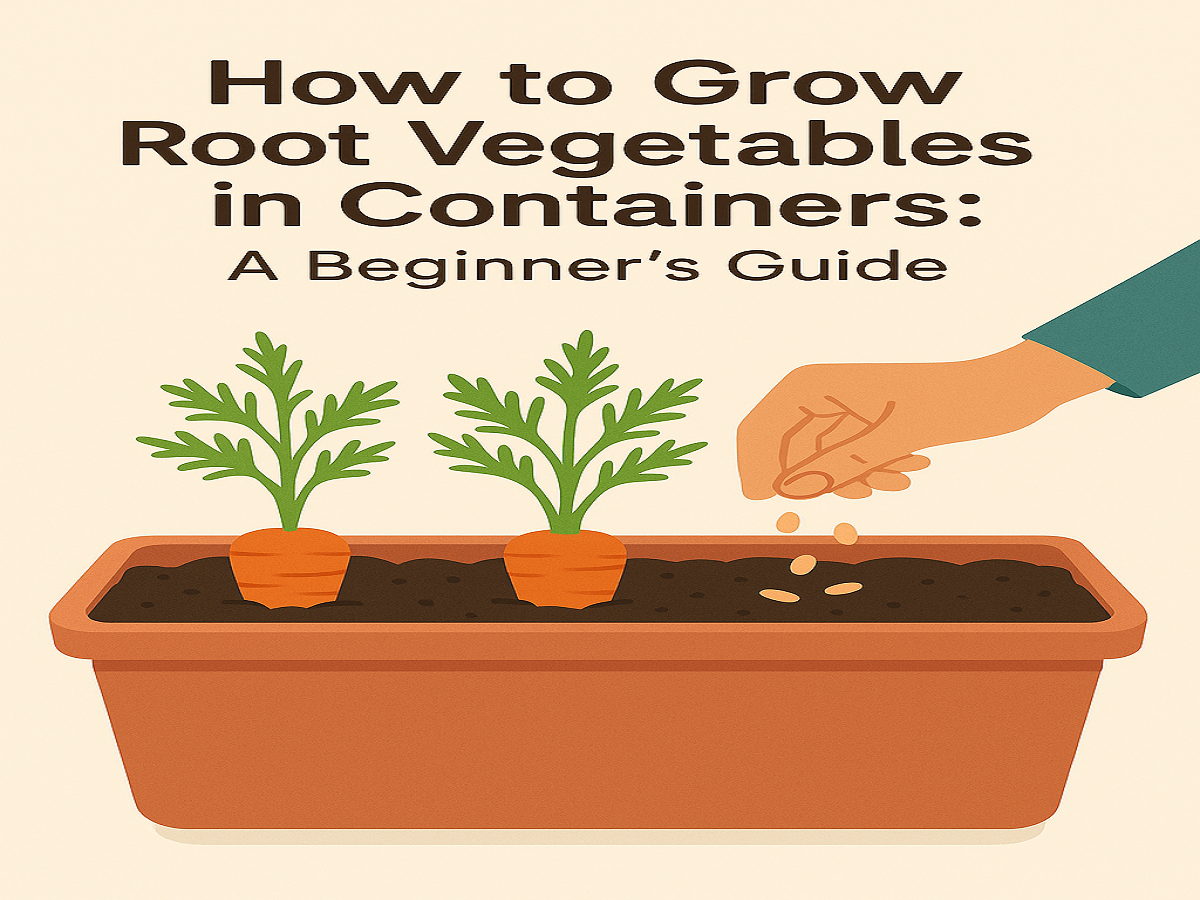
«Sow the seeds directly into the soil, covering them with about half an inch of soil.»
Space seeds 1–2 inches apart, depending on the vegetable. Crowded plants lead to twisted or underdeveloped roots.
Lightly cover with soil and water gently to avoid washing seeds away.
Keep the soil consistently moist during germination.
Germination times vary—radishes may sprout in 3–5 days, while carrots can take up to two weeks. Give the seeds time and avoid touching or disturbing the soil during germination..
💧 Step 4: Watering and Feeding
Water is crucial when growing vegetables in containers. Since pots dry out faster than garden beds, consistent watering is a must.
Keep soil moist but never soggy. Overwatering can lead to fungal issues.
Water deeply to encourage roots to grow downward.
Feed your plants with a balanced organic fertilizer every 3–4 weeks. Look for formulations high in phosphorus (P), which supports root development.
Mulch the top of the soil with straw or shredded leaves to help retain moisture, especially in warmer climates.
🐛 Step 5: Common Problems and How to Fix Them
Problem Solution
Thin or forked roots Ensure adequate spacing and use loose soil
Root maggots Use row covers, practice crop rotation, or apply neem oil
Poor germination Maintain soil temps between 50–85°F (10–29°C) and keep soil moist
Fungal issues Improve drainage and avoid overhead watering
Keeping your containers clean and rotating crops each season also helps reduce the chance of disease and pest buildup.
✂️ Step 6: Harvesting Your Root Vegetables
Knowing when to harvest is key to enjoying the best flavor and texture:
Radishes: Ready in 3–4 weeks. Harvest early to avoid woody or spicy roots.
Carrots and beets: Typically take 60–80 days. Check diameter at soil line.
Turnips should be harvested when their bulbs are about 2–3 inches wide to ensure the best taste..
Use a small garden fork or gently pull from the base of the greens while loosening the soil to avoid breaking roots.
🔁 Extra Tips for Container Root Gardening
Thin seedlings early to avoid overcrowding and encourage healthy root growth.
Rotate crops if reusing soil—don’t grow the same type of root vegetable in the same pot every season.
Use lightweight pots if you want to move them around to chase the sun.
Label your pots—some root crops take longer than others, and labels will help you keep track.
For urban gardening tips, try vertical gardening racks to save space and keep your containers off the ground.
✅ Final Thoughts
Container gardening makes it possible to grow delicious, healthy root vegetables even if you have minimal outdoor space. By choosing the right containers, preparing loose, rich soil, and following good watering and spacing habits, you’ll be well on your way to a bountiful harvest of indoor root vegetables.
Whether you’re trying to grow carrots in pots or building your first urban garden, these simple steps will help you grow like a pro.
📸 Share Your Garden With Us!
We’d love to see your container root veggie setups. Tag @UrbanGardenDaily on Instagram and show off your radishes, carrots, or beets!
📷 Free Image Suggestions (Use from Unsplash or Pexels):
“Carrots growing in pots”
“Radishes in container garden”
“Harvesting beets from pots”
“Urban root vegetable gardening”
Hi