Want to bring a splash of vibrant, hassle-free greenery into your home or office?
? Indoor succulents are some of the easiest plants to care for, making them perfect for beginners. With just a few simple tips for proper houseplant care, you can keep your succulents healthy and thriving all year round.
🌱 What Are Succulents?
Succulents make up a wide and varied group of plants, easily recognized by their thick, fleshy leaves or stems designed to retain water for long periods.. This remarkable adaptation allows Their ability to thrive in dry environments makes them perfect for indoor plant enthusiasts looking for low-maintenance greenery.
Popular types of succulents include aloe vera, jade plant, echeveria, haworthia, and sedum. Their vast range of sizes, colors, and textures makes them perfect for adding variety and interest to any indoor plant collection. Whether you prefer a single potted plant or a mixed arrangement, succulents are visually striking and adaptable.
🧠 Essential Supplies for Growing Indoor Succulents
To grow healthy succulents indoors, you’ll need a few key supplies:
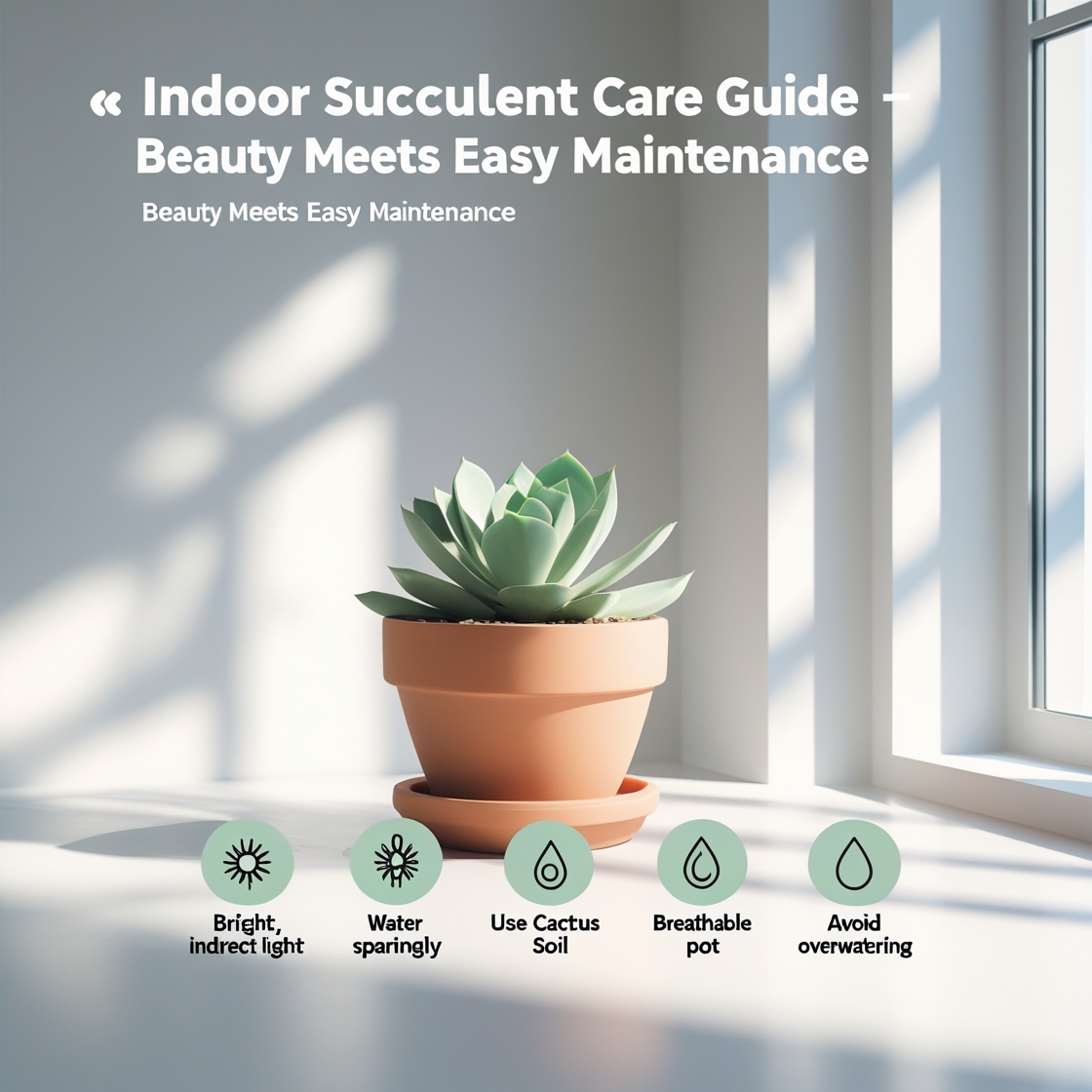
Pots with drainage holes: Succulents are prone to root rot, so good drainage is critical. Terra cotta or ceramic pots work well.
Well-draining soil: Use cactus or succulent potting mixFor better drainage, you can easily create your own soil mix by blending standard potting soil with perlite, pumice, or coarse sand.
Bright light: Most succulents need at least 4 to 6 hours of bright, indirect sunlight daily.
Watering tools: A small watering can with a narrow spout or a spray bottle helps control water application.
Optional top dressing: Add decorative gravel or small stones to improve appearance and drainage.
☀️ Light and Temperature Tips
Succulents love light, but too much direct sun can scorch their leaves. Ideal conditions include:
Placement near east or west-facing windows
Filtered light through curtains or blinds
Use of LED grow lights in low-light homes
The best indoor temperature range is between 60°F and 80°F (16°C to 27°C). Avoid placing your plants near cold drafts, air conditioners, or heaters.
💧 How to Water Indoor Succulents Properly
Watering is where many beginners struggle. Succulents need less water than other houseplants:
Water only when the soil is completely dry. This usually means every 1-2 weeks in spring/summer.
During fall and winter, cut back on watering to once every 3 to 4 weeks.
Soak the soil completely when watering, allowing any extra moisture to drain out through the holes at the bottom of the pot.Avoid misting the leaves, as too much moisture can cause rot and mildew.
Quick Tip: Insert your finger about an inch into the soil; if it feels dry, your plant is ready for a drink.
🦠 Pest and Disease Prevention
Succulents are generally resilient but not immune to problems:
Mealybugs: Appear as white, cottony spots. Gently eliminate them by applying rubbing alcohol with a cotton swab.
.
Spider mites: These tiny pests spin fine webs and can cause leaves to become discolored or speckled.. Treat with neem oil.
Fungal rot: Prevent by avoiding overwatering and ensuring good airflow.
Regularly inspect your plants for signs of pests or disease and act quickly if you notice changes.
✅ Propagation: Growing More Succulents
One of the greatest pleasures of owning succulents is how effortlessly you can propagate them, turning a single plant into a thriving collection.them and grow new plants from cuttings.. Here are the common methods:
Leaf cuttings: Remove a healthy leaf, let it callous over for a few days, then place on moist soil.
Stem cuttings: Cut a section of the plant’s stem, allow it to dry, then plant in soil.
Offsets (pups): Separate baby plants that grow near the base of mature succulents and replant them.
This is a fun and inexpensive way to expand your collection or share with friends.
🌿 Fertilizing for Strong Growth
Although succulents don’t need much fertilizer, occasional feeding can support growth:
Apply a balanced, water-soluble fertilizer at half the suggested strength for gentle feeding.
Boost your plants with monthly feedings during their active growing season, usually from spring to summer..
Do not fertilize in fall or winter when the plant is dormant.
Avoid over-fertilizing, which can lead to rapid, weak growth and distorted leaves.
🧼 Cleaning and General Maintenance
Keep your succulents healthy and looking great by:
Removing yellow or dead leaves
Wiping leaves with a soft cloth to remove dust
Rotating pots weekly for even sun exposure
Repotting every 2-3 years to refresh the soil and inspect root systems
These simple routines promote better health and appearance.
✅ Creating a Beautiful Indoor Succulent Display
One of the joys of succulent ownership is styling them creatively:
Group different shapes, sizes, and colors together for contrast
Use shallow bowls, terrariums, or hanging planters
Enhance your succulent display by adding decorative gravel, shells, or charming miniature figurines for a personalized flair.
Match containers with your home’s aesthetic: rustic, modern, boho, etc.
Succulents are like living art, and their versatility lets you refresh your decor anytime.
📆 Final Thoughts
Succulents provide a perfect balance of natural beauty and effortless care.. They’re ideal for busy people or beginners who want to enjoy plants without the constant care that other houseplants might require. With proper lighting, smart watering habits, and the right environment, your succulents will not only survive but thrive.
Start small, experiment, and enjoy the process — caring for indoor succulents is both rewarding and surprisingly easy.
📸 Share Your Succulent Journey!
We’d love to see your indoor succulent creations. Share photos and tag us on Instagram @UrbanGardenDaily to get featured in our community gallery!